October 14, 2026 · 7 min read
How to make a daily homeschool checklist kids can actually follow
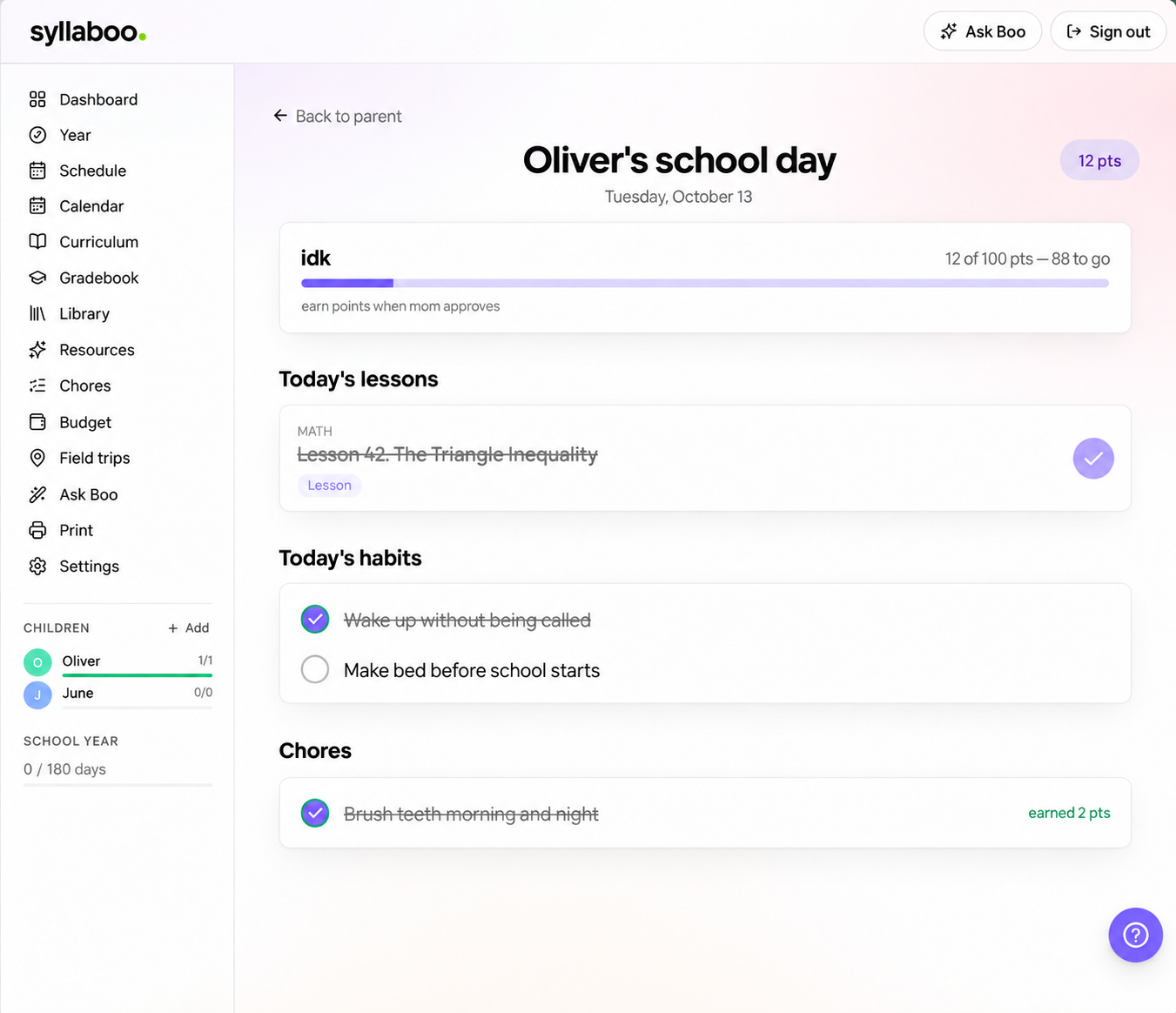
A child's checklist is not a miniature version of the parent planner. It should remove decisions, not display every planning detail. Oliver needs to recognize the subject, find the correct material, understand the task, and know what finished means; June may need the same information presented with fewer words.
Step 1
Show the curriculum name and the lesson name
Use ‘Beast Academy 3A — The Triangle Inequality,’ not only ‘Lesson 42.’ Numbers help preserve sequence, but names help children locate the right book, tab, video, or worksheet.
Step 2
Use one action per checklist item
Write tasks as visible actions: watch the lesson video, read pages 18–24, complete practice set A, or bring the written response to a parent. ‘Do math’ is too vague; a paragraph of teacher notes is too much.
If Guide, Online, and Practice are all parts of one daily lesson, show them as sections or activities inside that lesson. Splitting them into unrelated lessons makes the day look longer and hides the intended sequence.
Step 4
Separate schoolwork, habits, and chores
Brushing teeth is a habit. Emptying the dishwasher is a chore. Completing a math assessment is schoolwork. Children understand the day more easily when these categories are labeled correctly and completion has the expected result.
Step 5
Do not require a time slot for everything
Many homeschool families need an ordered Today list more than an hourly calendar. Use times for appointments, live classes, or activities that truly happen at a set time. Let ordinary lessons remain untimed unless the family chooses otherwise.
Step 6
Make completion and approval different
Children should be able to mark a lesson ready for review. The parent can then approve it, request a correction, or enter a grade. This prevents a quick checkmark from becoming the final record before anyone reviews the work.
Step 7
Keep the list short enough to trust
Optional enrichment should not silently appear as required work. A child who sees an impossible list learns to ignore the list. Show the required day first, then offer extras clearly labeled as optional.