October 14, 2026 · 9 min read
How to homeschool multiple children without juggling three planners
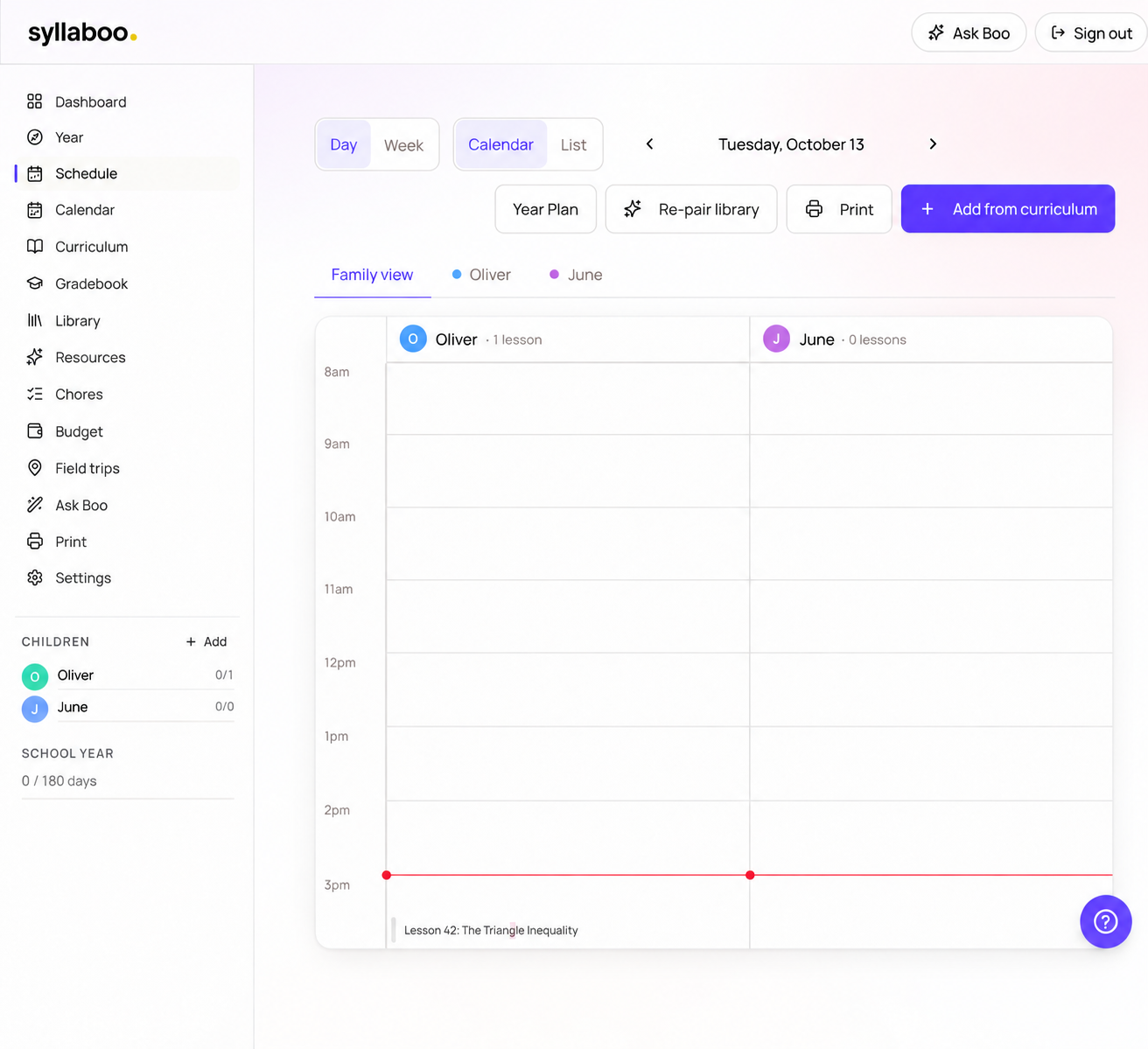
Planning for more than one homeschool child is not simply single-child planning repeated. The hard part is seeing the whole family at once while still giving each child work that matches their level, curriculum, and ability to work independently. If Oliver needs direct math instruction while June is ready to read independently, the plan has to make both realities visible.
Step 1
Build one family plan, not one planner per child
Separate planners make it difficult to notice conflicts. You can accidentally schedule two parent-intensive math lessons and a science experiment at the same time. Start with one family-level view, then separate the plan into daily lists for each child.
Step 2
Label every lesson by curriculum and title
A child should not see only ‘Lesson 42.’ Use the curriculum name and the actual lesson title so the child can find the correct book, video, workbook page, or online activity without asking what the number means.
Step 3
Mark parent-intensive work first
Before filling the week, identify lessons that require you: new math instruction, phonics, read-aloud discussion, science labs, or grading conferences. Place those first. Independent reading, practice, and familiar routines can fill the spaces around them.
- Parent-led: new instruction, oral work, labs, feedback, and discussion
- Independent: reading, familiar practice, review, and clearly explained activities
- Shared: read-alouds, history, science, art, music, and field trips where ages can combine
Combining children works best for content subjects. Everyone may study the same historical period or science topic while using different books, writing expectations, or assessments. Keep the shared family activity together, but record individual work separately.
Step 5
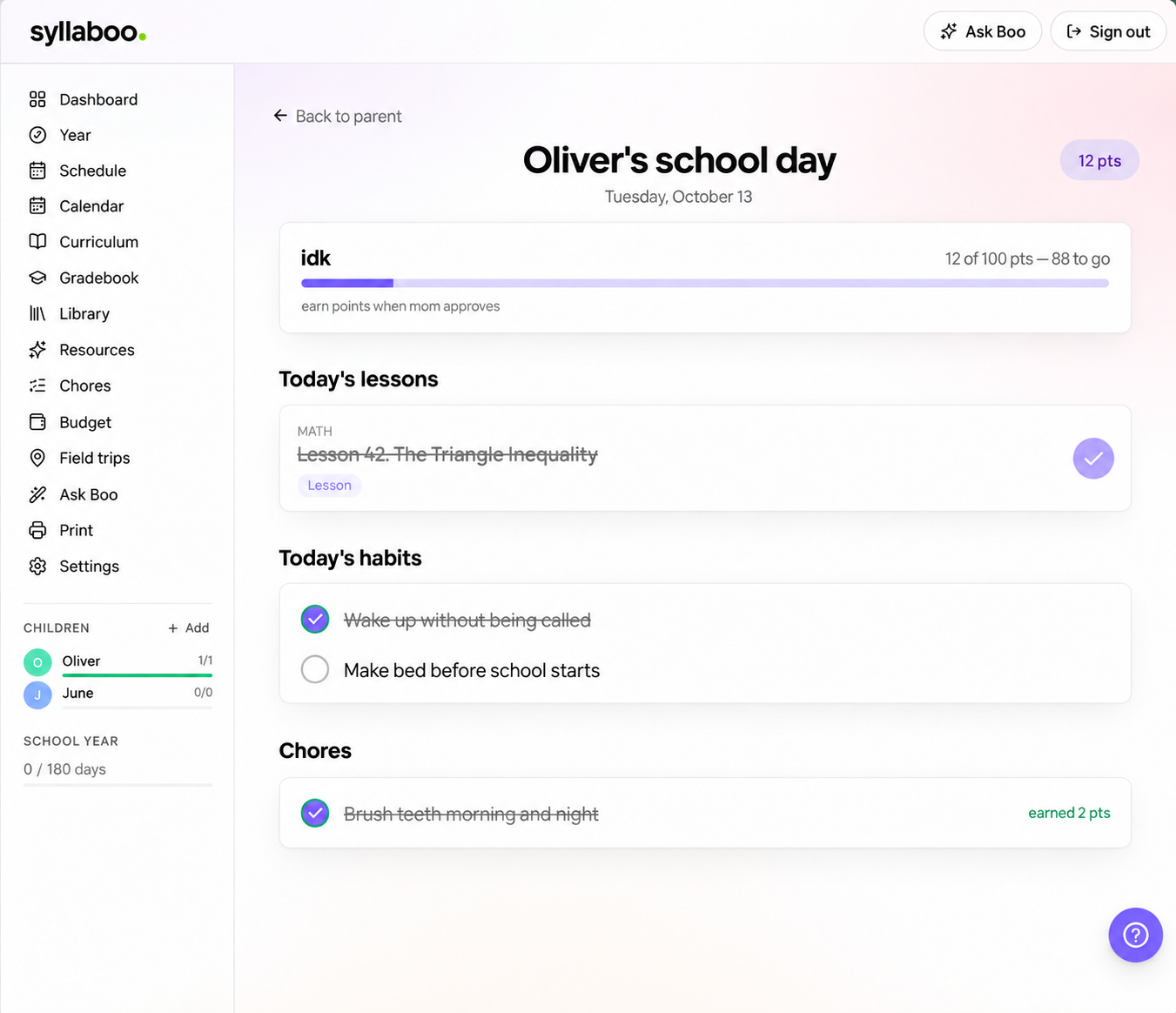
Give each child a short Today list
The family plan is for the parent. The child needs a much simpler answer: what am I doing today, where do I find it, and how do I show that it is finished? A daily checklist is usually more useful than a calendar full of time slots.
Step 6
Use a weekly reset instead of constant replanning
Spend a few minutes at the end of the week moving unfinished required lessons, removing optional work that no longer matters, and checking supplies for the next week. Do not rebuild the entire year because Tuesday went badly.
Step 7
Keep records attached to the correct child
Shared planning should not create shared records. Completion, grades, attendance, reading, and samples still belong to the individual child. A multi-child homeschool planner should make that separation automatic.