October 14, 2026 · 7 min read
How many homeschool lessons should you schedule each week?
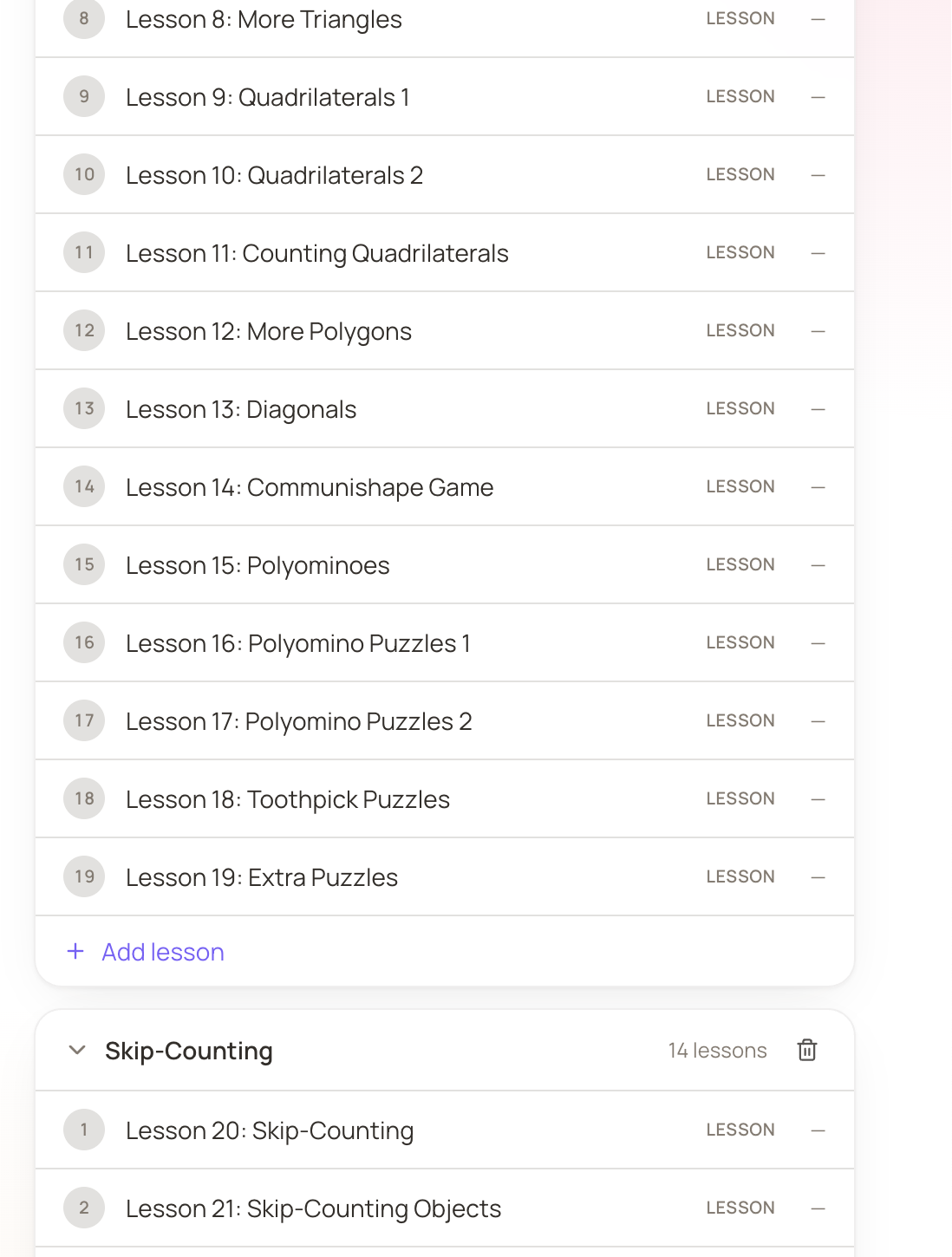
There is no useful universal answer such as ‘five lessons per subject.’ A realistic weekly load depends on what the publisher calls a lesson, how many days the family teaches, and how much of the work requires direct parent attention.
Step 1
Start with curriculum math
Divide required lessons by available teaching weeks. If math contains 140 lessons and you teach for 36 weeks, plan about four math lessons per week. If history contains 72 lessons, two per week may be exactly right.
Step 2
Check the size of the lesson
One curriculum's lesson may be fifteen minutes. Another may include an hour of instruction, practice, and discussion. Count workload, not just titles.
Step 3
Limit simultaneous parent-intensive work
If Oliver needs you for a new concept, schedule June's familiar independent work nearby. Avoid building a day where every child needs uninterrupted direct instruction at the same moment.
Step 4
Adjust by age and independence
- Early elementary: fewer, shorter lessons with frequent movement and parent help
- Upper elementary: a mix of direct teaching and clear independent practice
- Middle school: longer independent blocks with scheduled check-ins
- High school: course and credit requirements, deeper assignments, and firm deadlines
Step 5
Use a maximum, not only an average
An average of four lessons per week does not justify placing twelve lessons on Monday and none afterward. Set a reasonable daily maximum so imported or rescheduled work cannot overload one day.
Step 6
Review the actual week
If lessons regularly roll forward, the planned load is too high or the lesson estimate is wrong. Reduce optional work, change frequency, or give difficult lessons more than one day. A useful plan should reflect the child you have, not an imaginary perfectly efficient student.