October 14, 2026 · 8 min read
How to set up a homeschool gradebook that stays useful all year
A homeschool gradebook should answer a few useful questions: what did the child complete, what needs feedback, and how is the child progressing? It should not force you to assign a percentage to every read-aloud, discussion, or practice page.
Step 1
Start with courses, not isolated assignments
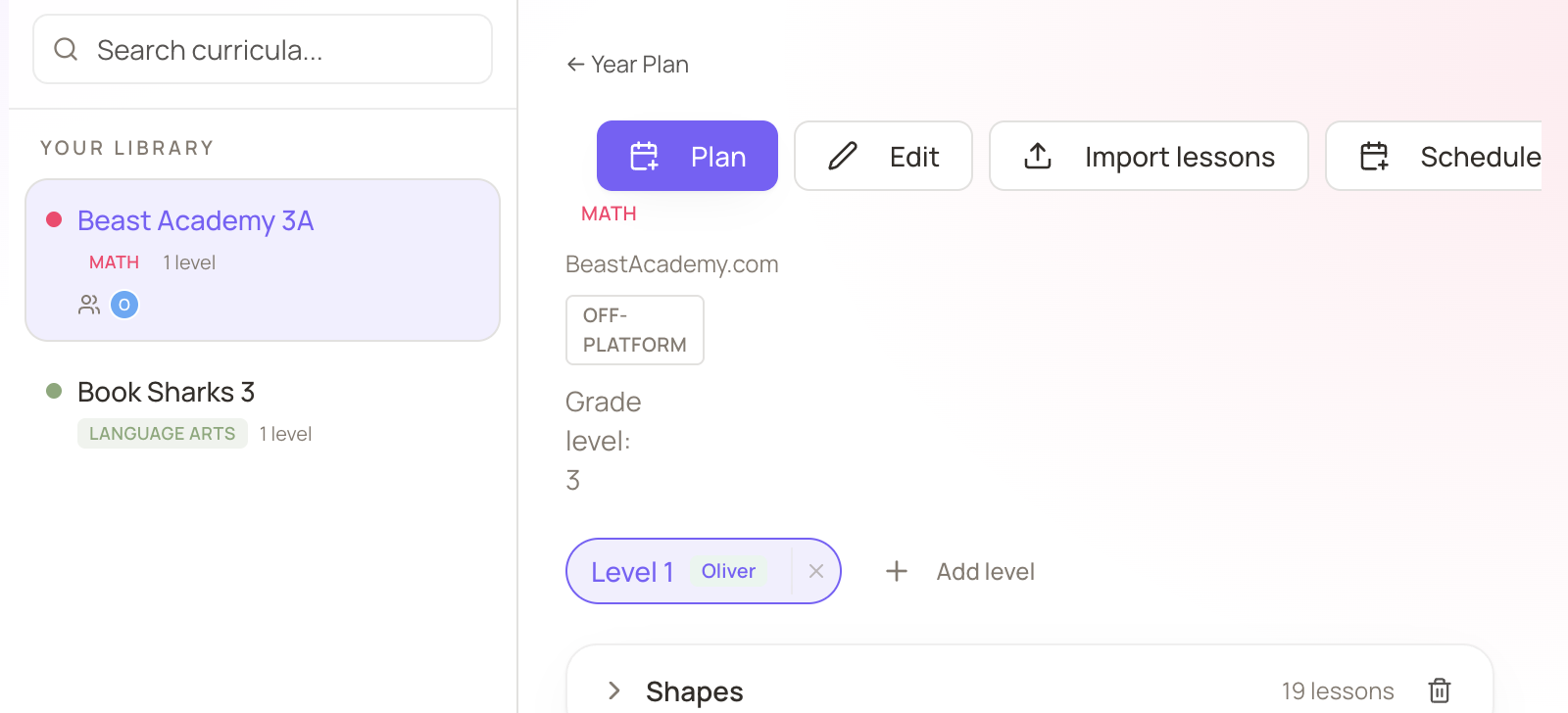
Create a clear course or curriculum label first. ‘Beast Academy 3A — Math’ is more useful than a folder called ‘Level 1.’ Every graded activity should remain connected to a recognizable course and lesson.
Step 2
Decide what deserves a grade
Grade work that demonstrates learning: quizzes, tests, essays, projects, lab reports, presentations, or selected problem sets. Practice can be reviewed and completed without affecting the course average.
- Practice: feedback and correction, usually not graded
- Formative assessment: a low-pressure check of current understanding
- Summative assessment: evidence of learning after a unit or course section
- Projects and writing: use a consistent rubric or clear criteria
Step 3
Choose a grading method before entering scores
A simple points system works for many families. Weighted categories can help in high school when tests, projects, and daily work should contribute differently. Whatever you choose, write it down at the beginning so the final grade is not based on memory.
Step 4
Keep completion separate from approval
A child marking work complete means the work is ready for review. Parent approval confirms that the lesson is finished. A score or feedback can come at approval time when the activity is graded.
Step 5
Record feedback while it is still useful
A number alone does not help a child improve. Add a brief note about corrections, strengths, or the next skill to practice. Keep that note with the assignment so it still makes sense months later.
Step 6
Review weekly, summarize periodically
Clear pending work once a week. At the end of a unit or grading period, review missing assignments, unusual scores, and whether the grade represents actual mastery. Fix problems before generating final reports.
Step 7
Preserve completed records
Changing or deleting a curriculum should not erase work the child already completed. Your gradebook is part of the homeschool record, so historical results need to remain understandable even when next year's plan is different.