October 14, 2026 · 9 min read
How to plan an entire homeschool curriculum without overloading the week
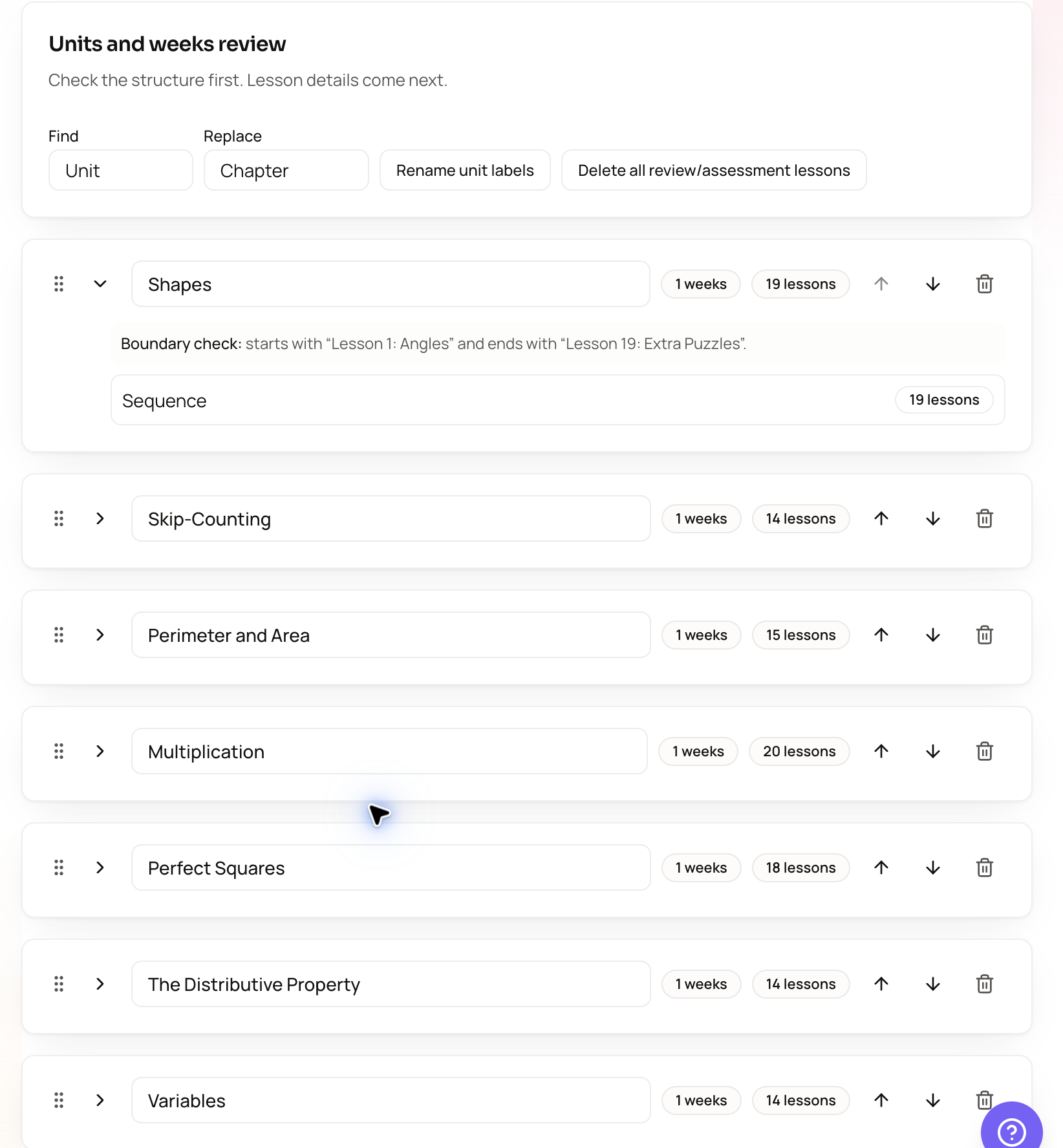
A full curriculum can look impossible when every chapter, worksheet, project, review, and enrichment activity is counted as a separate school day. The solution is not to squeeze nineteen lessons into one week. It is to understand what the publisher intended and build a plan around the family's actual school days.
Step 1
Count required lesson days first
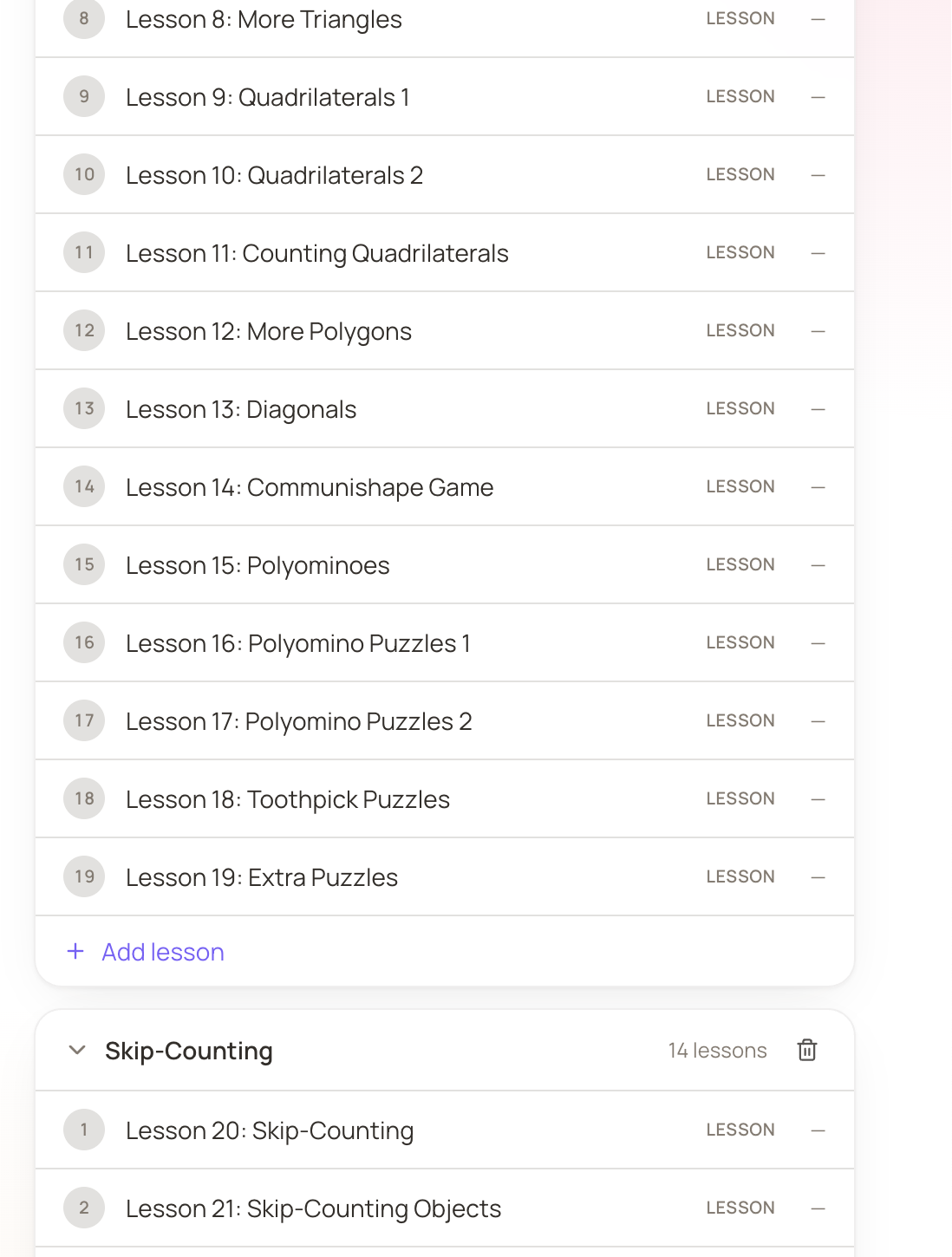
Begin with numbered or clearly required lessons. Keep optional projects, extra puzzles, reading suggestions, and enrichment in a separate count. This gives you the minimum number of school days the curriculum actually requires.
Step 2
Identify what belongs inside one lesson
A lesson may contain a parent guide, video, practice set, and short assessment. If those components are designed for the same day, keep them together. Splitting them into four calendar entries makes the course look four times longer than it is.
Step 3
Compare the lesson count with your school calendar
Divide required lesson days by the number of teaching weeks. A 112-lesson course across 36 weeks averages a little more than three lessons per week. That leaves room for review, appointments, field trips, and hard lessons that need another day.
Step 4
Plan by child, not only by curriculum
Oliver may move through a math sequence four days per week while June uses shorter lessons five days per week. The curriculum provides the order; the family chooses the pace.
Step 5
Use checkpoints instead of a rigid year
- Weekly: move unfinished required work and remove irrelevant extras
- Every four to six weeks: compare actual progress with the rough year plan
- At the end of a unit: decide whether review or remediation is needed
- At semester break: adjust the remaining pace without rewriting completed history
Step 6
Protect buffer days
A plan that uses every available day has no room for real life. Leave some school days unclaimed or deliberately lighter. Buffer is part of the plan, not evidence that the family is behind.
Step 7
Let optional work remain optional
Enrichment is valuable because it can deepen interest when time and energy allow. It stops being enrichment when it silently becomes required and makes the child feel perpetually unfinished.