October 14, 2026 · 8 min read
Checklist vs time-block homeschool schedules: which works better?
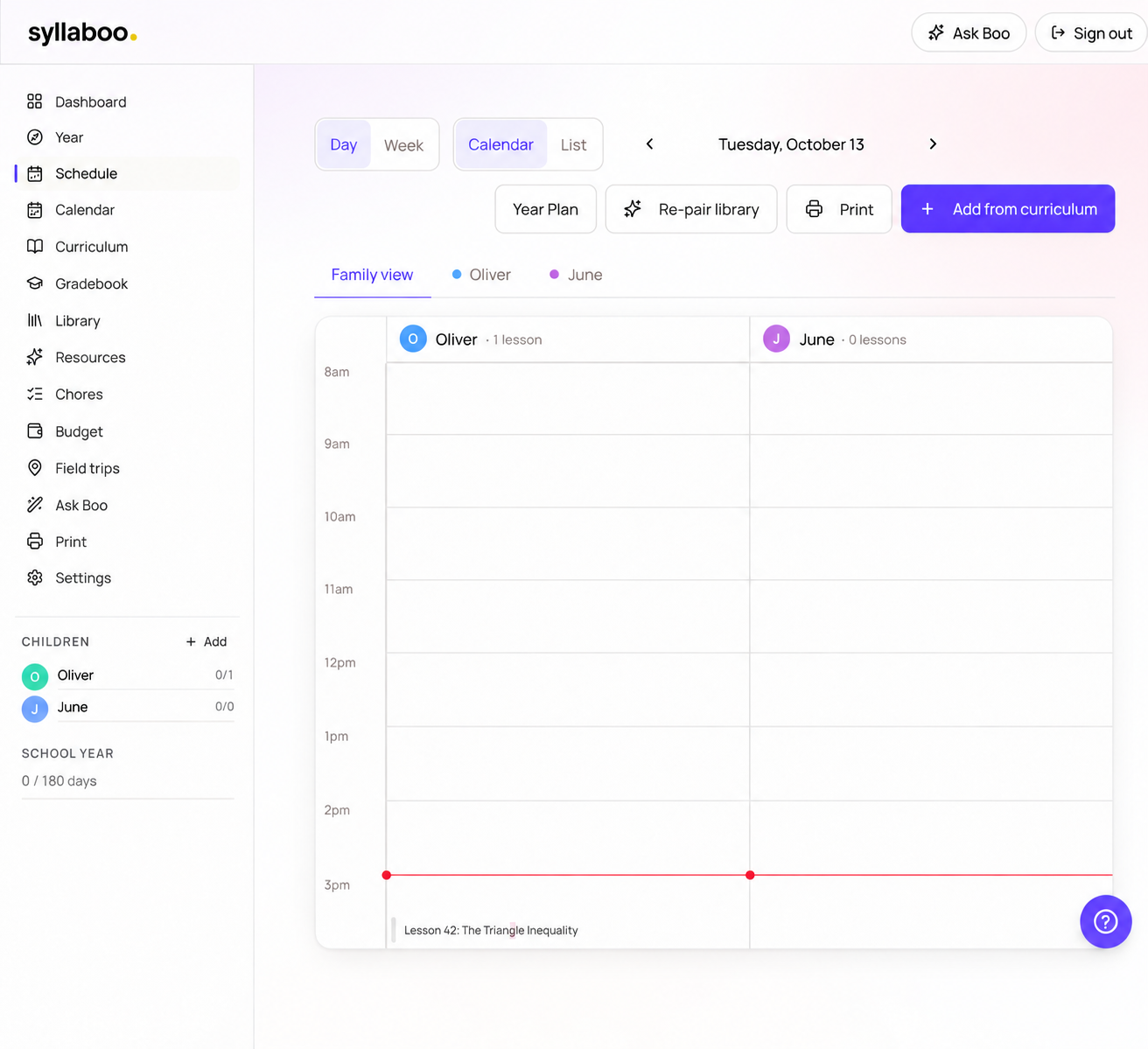
Many homeschool planners assume every lesson needs a start time. Most families do not actually run school that way. The useful question is whether a task must happen at a specific time or simply needs to be completed today.
Step 1
How checklist scheduling works
A checklist shows the day's required work in a useful order without assigning every item to a clock time. Oliver can move from math to reading when he finishes, and June's shorter list can remain independent of his pace.
Step 2
When a checklist is strongest
- Lesson length varies from day to day
- The family values flexibility and natural breaks
- Children work at different speeds
- Most work does not depend on an outside appointment
Step 3
How time-block scheduling works
Time blocks reserve a period for a subject or activity. They are useful for live online classes, therapy, co-op, tutoring, instrument lessons, appointments, or a parent teaching several children in rotation.
Step 4
Why a fully timed day often fails
A difficult math lesson runs long, reading finishes early, and the entire calendar immediately appears wrong. Parents then spend time repairing timestamps that never affected the actual order of schoolwork.
Step 5
A practical hybrid
Keep ordinary lessons in a Today checklist. Put only truly fixed events on a timeline. If the family wants more structure later, add optional default blocks by curriculum rather than silently assigning every lesson to 9:00 a.m.
Step 6
Choose the view the child needs
The parent may benefit from seeing the whole week. The child usually needs today's work, recognizable names, and a clear completion button. Do not make children decode an adult planning grid before they can begin.